A promising piece of land in Brentwood can look straightforward at first glance, but boutique development value here is rarely about acreage alone. If you are weighing a tract for estate lots, a small infill concept, or a corridor-based redevelopment play, the real story is in the details. This guide will help you evaluate what matters most in Brentwood so you can spot risk early, underwrite more confidently, and move forward with better clarity. Let’s dive in.
Why Brentwood Requires a Site-Specific Approach
Brentwood is not a broad greenfield market where large-scale subdivision assumptions easily carry from one tract to the next. The city covers about 42 square miles and notes that its zoning mix is roughly 90% residential, 5% commercial, and 5% service institutional. That alone tells you most boutique opportunities are likely to be infill parcels, assemblages, estate-lot plays, or selective corridor redevelopment rather than wide-open subdivision inventory.
That local context matters even more because Brentwood is actively updating its 2040 comprehensive plan in 2026, along with its Major Thoroughfare Plan. If you are evaluating land today, long-range policy and transportation assumptions should be treated as live variables, not fixed background information. A parcel that seems simple on paper may need a fresh look through the lens of current planning activity.
Start With Mapping Before Anything Else
In Brentwood, parcel research should begin with the city and county map tools. Brentwood and Williamson County both provide GIS-based resources for zoning, utility districts, land records, and parcel-level review. These tools are the first step in checking what a tract may realistically support before you spend money on surveys, engineering, or entitlement work.
For boutique development, this early map review can save time and capital. It helps you verify the basic framework around zoning, utility service, and surrounding land patterns. In a market as site-sensitive as Brentwood, that first pass is not optional.
Focus on Topography Early
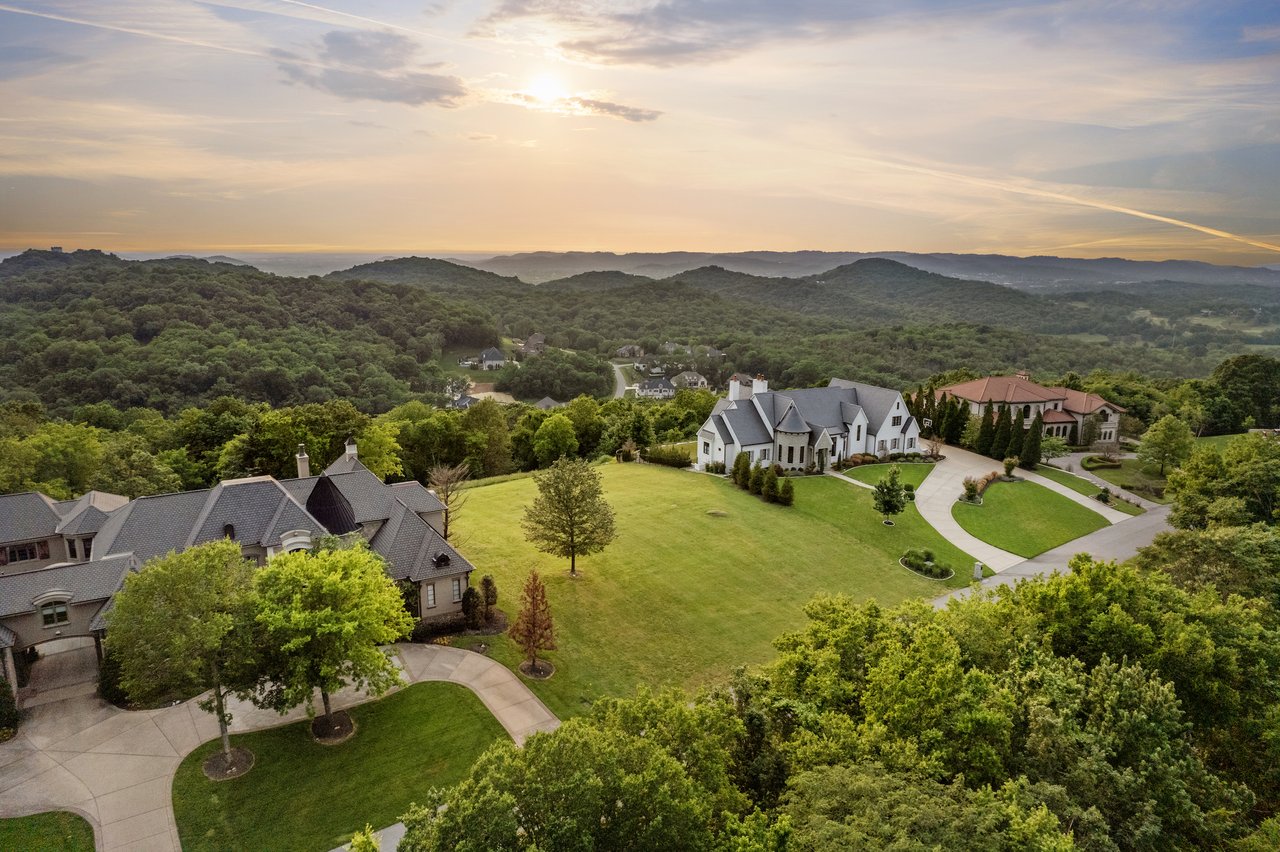
Brentwood’s rolling hills are part of what makes the area appealing, but they also create development constraints. The city identifies hillside protection rules that generally affect properties at or above 850 feet elevation unless the terrain is gently sloping. Within that overlay, the minimum lot area is three acres, and the city notes restrictions on land disturbance and tree cutting.
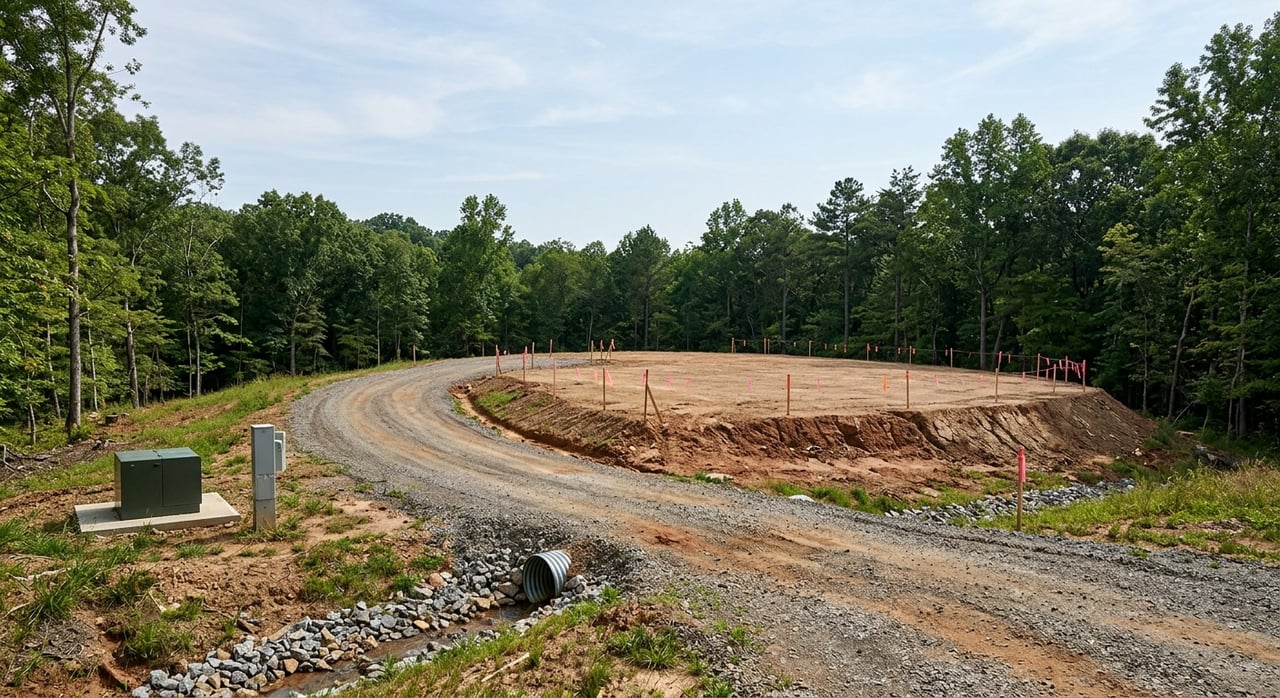
For you, that means a beautiful hillside tract may fit premium estate-style product, but raw acreage can be misleading. Grading costs, drainage planning, tree preservation, and the amount of truly buildable area often matter more than the gross tract size. A parcel with scenic appeal can still underperform if the usable footprint is too limited.
How Hillside Conditions Affect Value
Hillside land often carries a different value story than flatter parcels. In Brentwood, the premium may come from privacy, views, and estate positioning rather than higher density. If you are looking at boutique development, ask whether the site works best as a small number of strong homesites instead of a yield-driven play.
This is where disciplined underwriting matters. A tract that appears large enough for multiple lots may produce fewer practical homesites once slope, disturbance limits, and open-space needs are considered. In Brentwood, efficiency matters as much as acreage.
Access Is More Than Road Frontage
Many buyers assume road frontage automatically supports easy access and walkability, but Brentwood’s planning materials suggest a more careful review. The city notes that many neighborhoods were developed before sidewalks were required, so pedestrian facilities are limited or missing in many areas. Retrofitting older areas can also be difficult.
The city’s planning materials identify arterial streets such as Maryland Way, Franklin Road, Concord Road, and Wilson Pike as important corridor types. That can be helpful if a tract has visibility or corridor potential, but visibility alone does not guarantee practical access. The surrounding traffic pattern and pedestrian context still need to be checked parcel by parcel.
Walkability and Crossing Limits
Brentwood’s mid-block crossing policy is a useful reminder that access has limits. The city notes that such crossings may not be considered on state highways including Concord Road, Franklin Road, Moores Lane, and Wilson Pike, or on streets carrying more than 15,000 vehicles per day. In plain terms, a tract may sit on a prominent road but still offer a weaker pedestrian experience than the frontage suggests.
If your concept depends on residential convenience or mixed-use appeal, this matters. For smaller development projects, practical access can affect both design and marketability. You want to understand how people will actually enter, move through, and experience the site.
Utility Service Can Change the Entire Deal
Utilities are one of the biggest filters in Brentwood land evaluation. The city states that drinking water service varies by area, with central Brentwood usually city-served while eastern and western portions may be served by another water utility. Sewer coverage is also uneven, and Brentwood says its sewer service district does not include all residents.
The city specifically notes that most areas east of Edmondson Pike and Sunset Road are not provided sewer service. Brentwood also operates a collection-only sewer system that sends treatment to Metro-Nashville. For boutique development, this means you should confirm utility service before making assumptions about lot count, product type, or development costs.
Why Utility Verification Is a Cost Issue
Brentwood’s subdivision regulations make infrastructure verification more than a technical step. If a proposed subdivision is not directly adjacent to public sewer or water, city staff determines how connections must be made. If the development lies outside Brentwood’s water and sewer service area, the serving utility determines connection requirements.
The regulations also state that before a final subdivision plat may be recorded, the developer must post security equal to 110% of the estimated cost of remaining required improvements. That can affect your budget and timeline in a meaningful way. In short, utility assumptions should be tested early and carefully.
Know the Zoning Patterns That Drive Value
Brentwood places all land into one of fourteen zoning districts, but several are especially relevant for boutique development. On the residential side, AR, R-1, R-2, OSRD, and OSRD-IP are key districts to understand. These districts reflect Brentwood’s low-density land-use framework, which shapes both the feasible product and the likely buyer pool.
AR is intended for estate-type lots with a minimum size of three acres. R-1 is a large-lot district with a two-acre minimum, and R-2 is a low-density suburban district with a one-acre minimum. If you are evaluating a tract for homesites, these baseline rules can quickly narrow what is realistic.
Why OSRD Matters for Boutique Projects
OSRD can be especially important in Brentwood because it is built to preserve significant natural or manmade features, minimize disturbance of floodplains and steep hillside areas, and encourage open space along arterial streets and other visible tracts. Even when individual lots are smaller within an OSRD project, Brentwood’s residential framework still centers on a one-acre-density concept. That means open-space preservation is part of the development math.
OSRD and OSRD-IP also require a development plan to be submitted at the same time as the rezoning request. That plan becomes binding for the later plat. For you, the takeaway is simple: in these districts, value often depends on the quality and fit of the site plan, not just the number of acres.
Corridor and Transitional Uses
Commercial and mixed-use potential exists in Brentwood, but it is limited and highly location-specific. The city identifies C-1 as transitional office, C-2 for retail and office uses, C-3 for service warehouse, and C-4 as the town-center district. C-4 was designed to support redevelopment in older northern commercial areas and encourage a more compact, pedestrian-oriented layout.
Service-institution districts also matter for some development strategies. Brentwood says SI-1 through SI-4 are intended as transitional uses, especially on tracts next to arterial streets where residential development is not appropriate or feasible. If a site sits along a major corridor, these districts may shape the most practical exit path.
Match the Site to the Most Likely Exit
In Brentwood, the best exit strategy usually comes from the cleanest risk-adjusted path, not the most aggressive concept. Because the city emphasizes low density, open space, and site-specific planning, the premium often comes from entitlement clarity, utility access, and compatibility with the surrounding pattern. That tends to support a few common outcomes.
Those outcomes may include:
- A raw-land sale to an estate buyer or custom builder
- A finished-lot or partially entitled sale to a small developer
- An OSRD-style residential project with preserved open space
- A corridor-based commercial or institutional sale on an arterial-adjacent tract
If you are studying a site, ask which of these paths feels most natural under current zoning, utility conditions, and access realities. The right answer is often the one with the fewest forced assumptions.
Evaluate Buyer Demand by Product Type
The likely buyer for Brentwood land usually follows the tract’s zoning and physical character. For residential land, the probable end user is often a buyer seeking privacy, scenery, and larger lots. For repositioning opportunities, the likely buyer may be a small developer or investor looking to assemble, entitle, or improve a tract for estate lots or a low-density subdivision.
There is also demand for arterial-adjacent land suited to office, medical, educational, religious, or senior-housing uses in the appropriate commercial or service-institution districts. The key is to align your expectations with the city’s land-use structure. In Brentwood, boutique development succeeds when the product fits the parcel and the parcel fits the pattern.
Use a Simple Brentwood Due Diligence Sequence
When you are screening land in Brentwood, a practical review order can help you avoid expensive missteps. The city’s planning and mapping framework makes it clear that topography, utilities, and access can shift a site’s highest and best use more than location alone.
A smart first-pass checklist includes:
- Confirm zoning on the city map
- Confirm parcel basics and surrounding context on county GIS
- Verify utility district coverage
- Review hillside and open-space constraints
- Layer in survey, title, and civil engineering before pricing exit value
That sequence is especially useful in a market where a parcel can look compelling from the road but tell a very different story under closer review.
Why Timing Matters Right Now
Brentwood’s rule set is current, but it is not static. The city’s 2040 Plan update is active in 2026, and subdivision regulations were amended in 2024 and took effect on September 1, 2024. If you are evaluating a development parcel, the timing of your review matters.
A tract that checked the boxes a year ago may still deserve a fresh entitlement and infrastructure review today. For boutique projects, current information is part of risk control. Local land decisions are rarely one-size-fits-all in Brentwood.
If you are considering Brentwood land for a boutique development project, the best next step is usually a careful parcel-by-parcel review grounded in current zoning, utility realities, and the site’s physical constraints. That kind of analysis can protect your downside and help you identify where real opportunity still exists. When you want experienced guidance on Brentwood land, estate parcels, and development opportunities across Williamson County, connect with Lisa Jurney Walker.
FAQs
What makes Brentwood land different for boutique development?
- Brentwood is heavily residential, with limited commercial and service-institution land, so opportunities are often parcel-specific infill, estate-lot, assemblage, or corridor redevelopment plays rather than broad subdivision projects.
What should you check first on a Brentwood development parcel?
- Start with the city and county GIS tools to confirm zoning, parcel basics, utility district coverage, and surrounding land-use context before spending money on deeper due diligence.
How does hillside land affect Brentwood development potential?
- Hillside conditions can limit disturbance, tree cutting, and lot design, especially in areas affected by the city’s hillside protection overlay, so usable buildable area may matter more than total acreage.
Why are utilities so important for Brentwood land underwriting?
- Water and sewer service are uneven across Brentwood, and connection requirements can vary by location, which can materially affect project cost, timeline, and feasible product type.
Which Brentwood zoning districts matter most for small residential projects?
- AR, R-1, R-2, OSRD, and OSRD-IP are some of the most relevant residential districts because they shape lot size, density, open-space expectations, and entitlement strategy.
What is a likely exit strategy for boutique land in Brentwood?
- Depending on the parcel, a practical exit may be a sale to an estate buyer, a custom builder, a small developer pursuing finished lots or entitlement work, or a corridor user in the appropriate district.