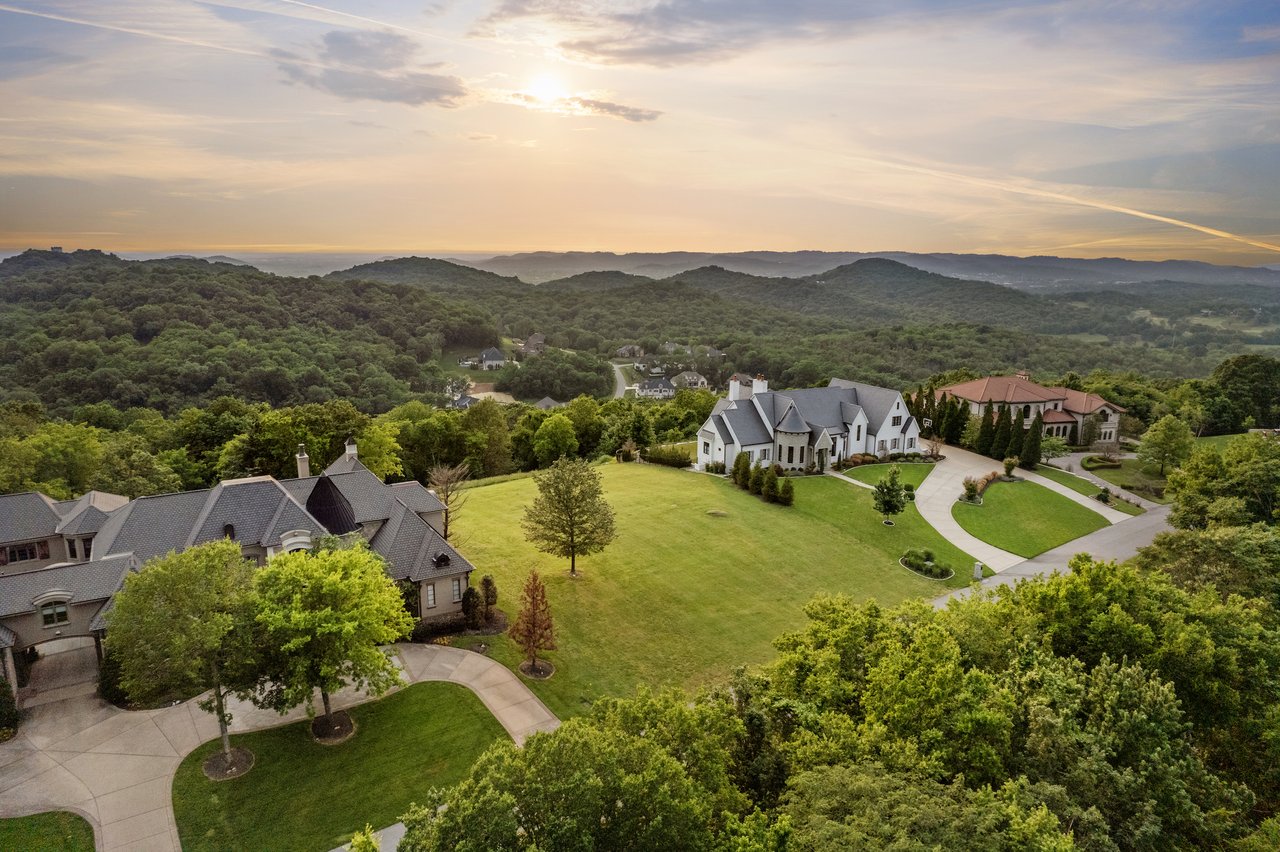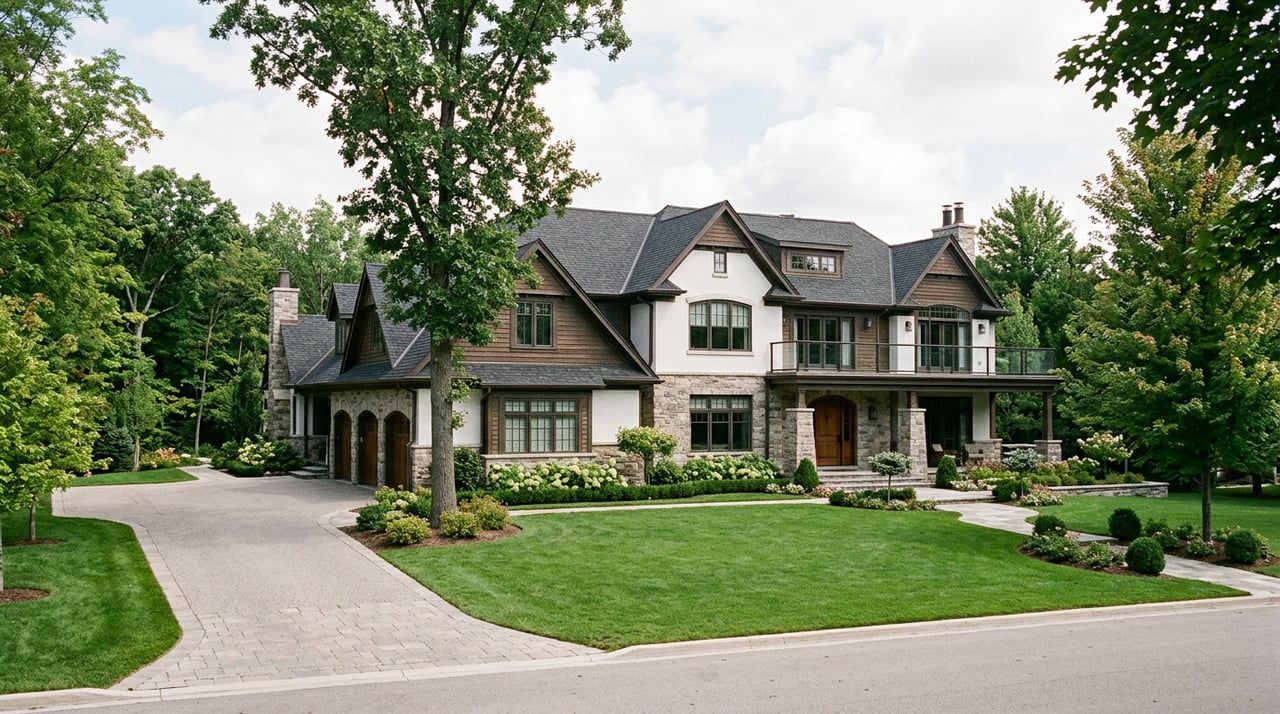
Two buyers looked at homes on the same afternoon last spring, both in the $1.8 million range, both custom-built on wooded acre-plus lots, both inside the 37027 ZIP code. One house sat west of Sunset Road. The other sat east of it. On paper, the comparison sheet looked identical. In the contract, it wasn't close. One property connects to the City of Brentwood's sewer system. The other runs on a septic tank that Williamson County has to certify, permit, and cap at a specific number of bedrooms.
Nobody put that difference on either listing sheet. It's not the kind of thing a portal photo shows, and it rarely comes up until an inspector, a title company, or a buyer's agent who knows the map asks the right question at the right time.
The Line the City Draws for You
Brentwood is not one utility footprint wearing one name. The city's own water services page states it plainly: the sewer service district does not include all residents within the city, and with a few exceptions, the City of Brentwood does not provide sewer service to most areas east of Edmondson Pike and Sunset Road. East of Sunset Road, sewer service generally shifts to Metro Water Services out of Nashville. Water service east of Edmondson Pike, meanwhile, runs through the Nolensville/College Grove Utility District rather than the city's own system. Anything outside all three of those service footprints is septic, regulated under state code through Williamson County Environmental Health.
That means three different authorities can govern water and sewer inside the same city limits, and the boundary lines don't track subdivision names or price points. A property can sit a few hundred yards from another one on a completely different system, and the only way to know for certain is to ask, not to assume based on the neighborhood's reputation or the size of the lot.
| Authority | What it covers | What it means for a buyer |
|---|---|---|
| City of Brentwood | Water and sewer for most of the city | Standard municipal billing, predictable connection, city-maintained mains |
| Metro Water Services (Nashville) | Sewer for areas generally east of Sunset Road | A different billing entity and a different maintenance authority than the address's city limits suggest |
| Nolensville/College Grove Utility District | Water for areas generally east of Edmondson Pike | Water bill and sewer authority may not be the same provider |
| Septic, under TDEC and Williamson County Environmental Health | Properties outside all three sewered footprints | Bedroom count is legally capped by the permitted system, not by the floor plan |
Why the Older Half of the Map Runs on Tanks
Brentwood's housing stock didn't arrive all at once, and the utility map reflects that. The established estate neighborhoods built from the 1970s through the 1990s, the ones with mature hardwoods, long gravel or asphalt drives, and custom stonework, were largely built before the city's sewer footprint reached that far. Newer construction pushing toward Nolensville Road came later, often built directly onto the extended sewer grid from the start.
That split matters for more than plumbing. Older neighborhoods on the septic side typically still drain through original cast iron or clay laterals, the kind that develop root intrusion at pipe joints as decades-old hardwoods search out moisture along the pipe seams. None of that shows up in a curb appeal photo. It shows up in a camera inspection, and it shows up on a septic permit that either exists in the county's files or doesn't.
What Tennessee Law Actually Requires
Tennessee treats septic disclosure as a specific, separate obligation, not a footnote inside the general property condition form. Under state code, a subsurface sewage disposal system is permitted for a set number of bedrooms, and sellers are prohibited from advertising or marketing a home as having more bedrooms than the permit allows. Tennessee REALTORS publish a dedicated form for this, the Subsurface Sewage Disposal System Permit Disclosure, precisely because the number matters enough to require its own paperwork.
Even when a buyer waives the standard disclosure form in favor of an as-is sale, four categories survive every path under Tennessee's disclosure statute: known sinkholes, exterior injection wells, percolation test results, and whether the property sits inside a planned unit development. A percolation test result, in plain terms, is the soil study that determined how much wastewater the ground under a given lot can actually absorb, which is the same study that sets the bedroom cap in the first place.
If you can't find the septic permit, you don't know the legal bedroom count. You know what the builder called it on the floor plan, and those are two different numbers.
The Cost Gap That Doesn't Show Up in the Median Price
A septic system in good working order is a non-event. A septic system that needs repair or replacement is a different conversation, with repair and replacement costs commonly running from around five thousand dollars into the thirty-thousand-dollar range depending on the scope of the failure and the soil conditions on the lot. That range sits entirely on one side of Brentwood's utility map. A property on city sewer doesn't carry that exposure at all.
The city's own infrastructure story adds context here rather than alarm. Brentwood operates as a collection-only sewer system with no treatment plant of its own, a structure that traces back to a 1980s EPA-driven consolidation of treatment across the Nashville area. A 2006 agreed order with the Tennessee Department of Environment and Conservation put the city on a long-term corrective action plan to rehabilitate aging sewer infrastructure, and that work is still visible on the city's capital projects page today, including a second wet weather storage facility near Tower Park that began construction in late 2025 or early 2026 and remains underway on a roughly fourteen-month build timeline. Mayor Nelson Andrews pointed to exactly why that investment keeps happening, telling city commissioners in the spring of 2025 that the area had gotten "5 inches of rain in 12 or 13 hours," the kind of event that puts real pressure on any collection system, sewered or septic.
None of that changes a buyer's math on an individual house. It does explain why a sewer connection in Brentwood isn't a static, finished asset. The city keeps investing in it, which is one more reason a sewer-connected address and a septic-only address aren't really comparable properties dressed in the same price bracket.
If You're Shopping the Older Side of Brentwood
Before writing an offer on a custom-built, acre-plus property in one of Brentwood's established neighborhoods, a few questions settle the utility question before it becomes a closing surprise.
- Ask directly which authority serves the address for both water and sewer, since the city, county, and utility district lines don't always match the mailing address.
- If the answer is septic, request the permit and confirm the certified bedroom count against the actual floor plan before the inspection period closes.
- Search the state's own septic permit records through TDEC's public system to confirm what's on file independent of what the seller's paperwork says.
- Schedule a camera inspection on any lateral serving a home built before the 1990s, since root intrusion and bellied pipe runs are the most common failure points in Brentwood's older custom-built pockets.
- If the property is on city sewer, that's typically the end of the conversation. If it isn't, treat the septic disclosure form as required reading, not a formality.
If You're Selling
The obligation runs the other direction for sellers on the septic side of the line. Tennessee law makes it illegal to market a home as having more bedrooms than the permitted system supports, and the fix isn't complicated: pull the permit before the home goes live, confirm the bedroom count matches the listing, and have that paperwork ready for the buyer's agent on day one. A seller who can't locate the original county permit isn't necessarily in violation, but the home should be marketed and priced with that gap disclosed rather than discovered during due diligence.
A Few Questions Worth Asking Directly
How do I find out for certain whether a specific Brentwood address is on city sewer, Metro sewer, or septic? Start with the city's own sewer system page and service area map, then confirm with a direct call to Brentwood Water Services, since the boundary described there is general rather than parcel-specific.
Can an older septic property ever connect to city sewer if a line runs nearby? It depends entirely on whether a city main actually reaches that parcel, which isn't guaranteed just because a neighboring street is sewered. That's a question for Brentwood Water Services, not an assumption to build a renovation plan around.
Does a septic system limit how large a future addition or accessory structure can be? Yes, in effect. Adding bedrooms beyond the system's certified capacity generally requires a new percolation test and a new permit, which depends on the soil conditions on that specific lot, not on how much land surrounds the house.
The homes on either side of that boundary line can look nearly identical from the street. The paperwork behind them rarely is. If you're weighing a purchase or a sale on Brentwood's older, larger-lot side of town, Walker Luxury & Land can walk the utility and disclosure specifics with you before you're standing in an inspection period wishing you'd asked sooner. Schedule a Private Consultation and bring the address. We'll help you find out which system it's really on.