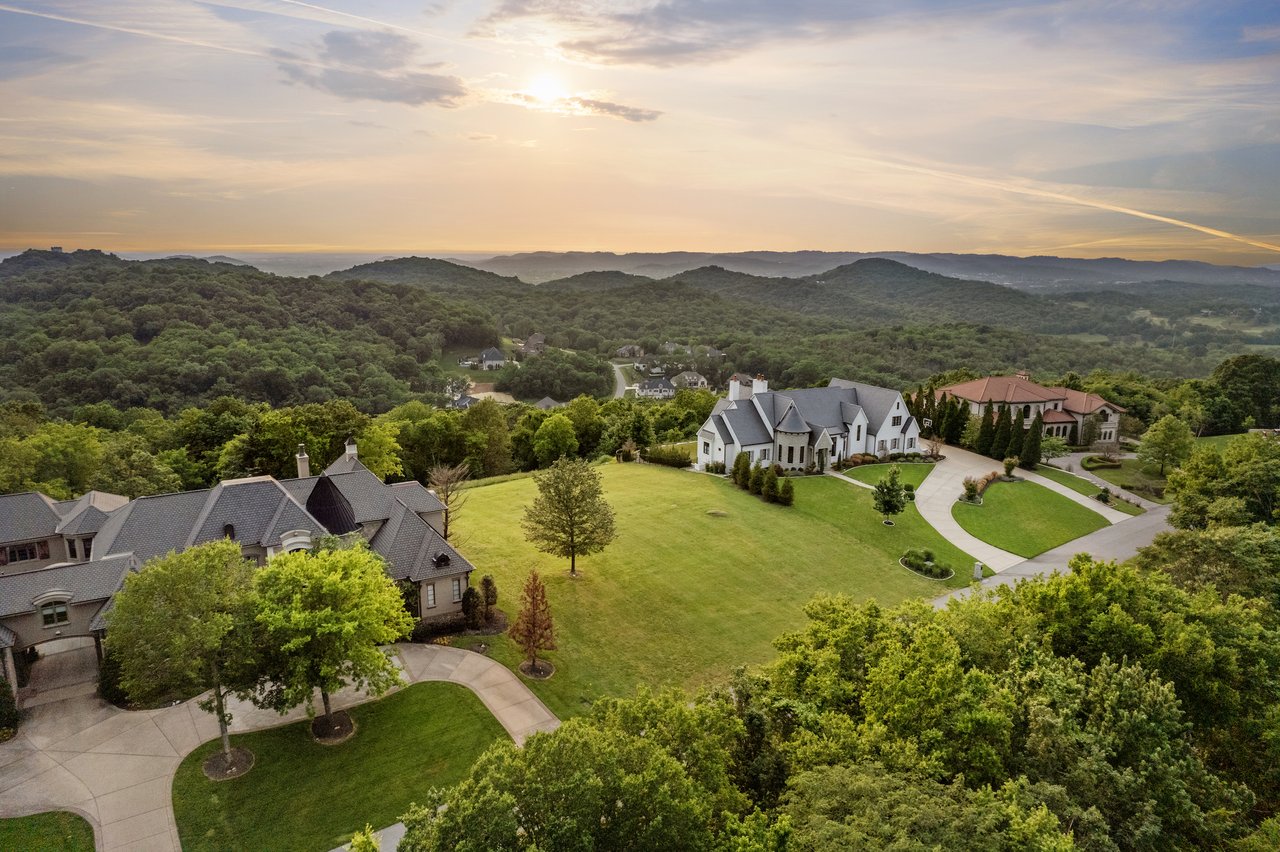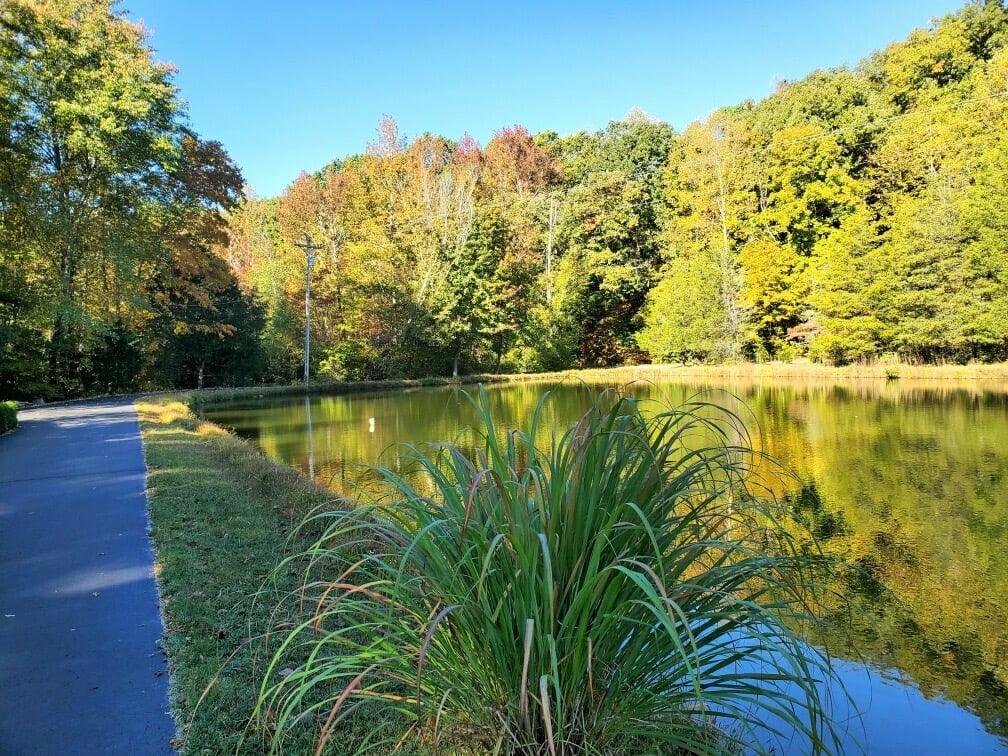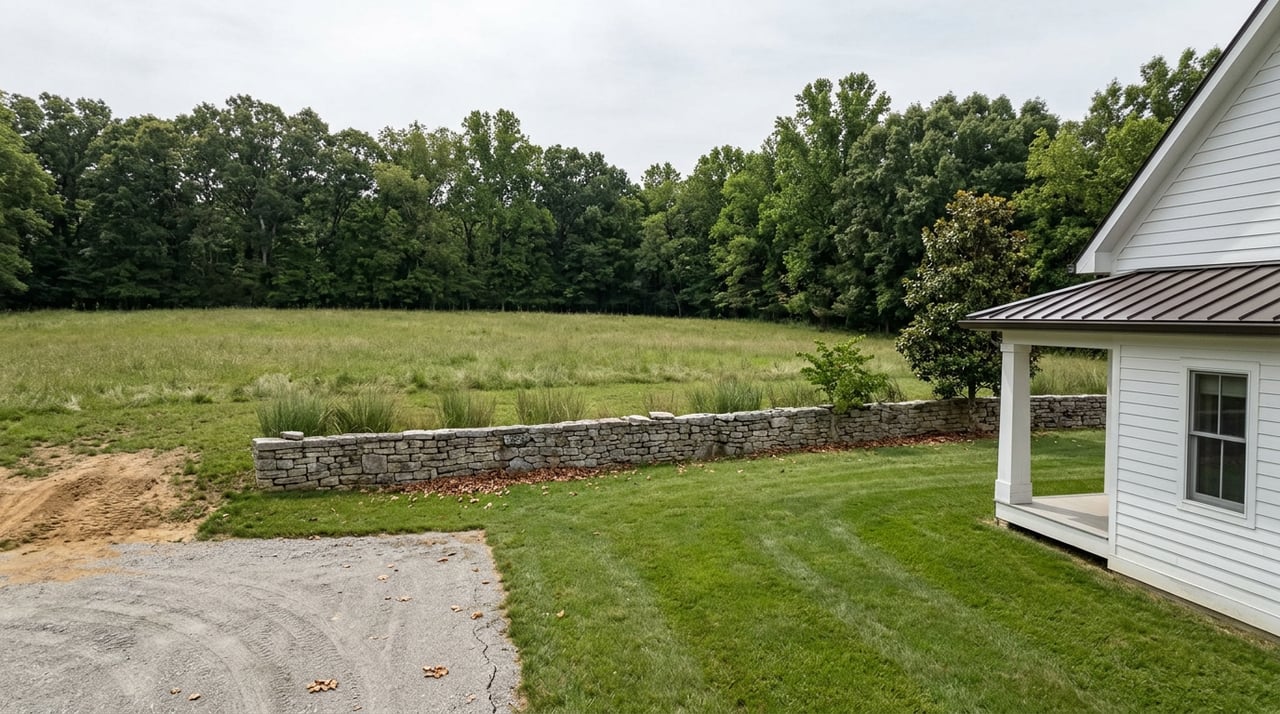
A 111-acre offering near Leiper's Fork sounds like it should build almost anything you want. Look closer at the listing and the real number shows up: two platted, approved building sites, an eight-bedroom hilltop residence and a five-bedroom guest house, combining for roughly ten usable acres. The other 101 acres are pasture, hardwood, and view. They are worth paying for. They are not the acres that let you pull a building permit.
That gap between what a tract measures and what it can hold is not an accident of one unusual property. It is how land works in unincorporated Williamson County, and it is the single fact that most acreage shoppers comparing Leiper's Fork listings on the portals never price in. The number on the deed tells you what you own. The number the county's Department of Sewage Disposal Management assigns to your soil tells you what you can build.
The Acreage Figure Measures Land. It Doesn't Measure House.
Leiper's Fork has no public sewer. Every home here, from a renovated farmhouse on five acres to a custom estate on forty, runs on a private septic system, and every one of those systems has to sit on ground that passes a percolation test. That test measures how fast water moves through undisturbed soil, and Tennessee's threshold for a conventional system is unforgiving: no more than 105 minutes per inch. Fail that grid and the parcel needs an alternative system, or the acreage under those failed holes simply cannot host a drain field at all.
This is why two similarly sized tracts along Southall Road, both fronting the West Harpeth River, can carry different value even before either lot is graded. One carries a recorded septic site approved for a five-bedroom home. Another nearby carries a recorded site approved for six. The acreage is close. The buildable house is not.
Why Williamson County Plays By Its Own Rules
Most Tennessee counties hand septic permitting to the state's environmental health program. Williamson County is one of only nine counties in the state, a group that also includes Blount, Davidson, Hamilton, Jefferson, Knox, Madison, Sevier, and Shelby, that runs its own contract program instead. Under Tennessee law, a contract county's rules have to be at least as strict as the state's and are legally permitted to go further. Williamson County has gone further, with a code that runs to roughly 40 sections and 19 appendices, a dedicated department, and its own Board of Health that can adopt standards beyond what the state requires.
That local strictness is exactly why the recorded septic site matters more than the plat's total acreage. Under the state's own trench-bottom formula, every additional bedroom in a house needs a minimum of 370 square feet of disposal field. Run that math across a typical range of home sizes and the gap between a modest cottage and a large estate becomes concrete:
| Bedrooms | Minimum trench bottom required |
|---|---|
| 3 | 1,110 sq ft |
| 4 | 1,480 sq ft |
| 5 | 1,850 sq ft |
| 6 | 2,220 sq ft |
| 8 | 2,960 sq ft |
Soil that passes the percolation test across a large enough footprint to hit that eight-bedroom threshold is genuinely scarce in rolling, rocky Williamson County terrain. That scarcity is the real product being sold when a listing advertises "recorded septic site approved for a six-bedroom home." It is not decoration. It is the ceiling on what the next owner can build, regardless of how many acres surround it.
The Cost Gap Nobody Puts In The Listing
Even once a site passes, the county's stricter standard shows up again at the invoice. Williamson County does not publish official cost data for septic installation, and neither does the state, so any single number should be treated with some caution. But a county commissioner put a figure on the record in a September 2025 Williamson Herald opinion column, arguing for looser rules:
"the average cost for the most common system required by county regulations is $80,000 to $100,000"
He broke that down as $30,000 to $40,000 in compliance costs on top of $50,000 to $60,000 for installation, against a statewide average he estimated at roughly $10,000. That figure comes from one side of an active local policy argument, not a neutral survey, and it should be read that way. But even discounted for advocacy, it points at something buyers of raw Leiper's Fork acreage consistently underweight: the septic system on a large custom home here is not a rounding error in the construction budget. On a project already carrying six-figure site work, land grading, and a well or propane hookup because there is no municipal water or gas either, the difference between a straightforward conventional system and an engineered low-pressure-pipe or mound system, driven entirely by what the soil evaluation finds, can move the total project cost by tens of thousands of dollars before a foundation is poured.
What This Means If You're Shopping Tracts
The acreage total on a Leiper's Fork listing is a starting point, not an answer. Before writing an offer on raw land, or even a home on a large lot where you might want to add a guest house or barn apartment, the questions worth asking are specific:
- Is there a recorded septic permit or an approved soil evaluation on file, and how many bedrooms does it support?
- If no permit exists yet, has a percolation test or soil map been done anywhere on the property, and by a soil scientist certified by the state?
- Does the property sit in a floodplain, carry an easement, or fall under any conservation restriction that would remove usable acreage from the septic calculation?
- If the site requires an alternative system such as low-pressure pipe or mound, what did the soil consultant's report estimate for cost and footprint?
A seller who can answer all four with paperwork in hand is offering something meaningfully more certain than one who can only point at a survey and a view.
What This Means If You're Selling
The flip side runs the same direction. A recorded, bedroom-rated septic site is one of the few improvements a landowner can make to raw acreage that shows up directly in a buyer's underwriting math, not just the marketing photos. Getting a soil evaluation done before listing, even on a tract that has sat unbuilt for years, turns an abstract acreage number into a documented building capacity, and it answers the first question a serious buyer or their agent is going to ask. On land where the county's own rules make that capacity the scarcest resource on the parcel, proving it in advance is worth the consultant's fee.
A Few Questions Worth Asking Directly
Does every property in Leiper's Fork need its own septic system? Yes. There is no public sewer service in the area, so every home relies on a private on-site system permitted through the Williamson County Department of Sewage Disposal Management, which has jurisdiction over the unincorporated county as well as land inside its incorporated towns.
Can a property's bedroom cap be raised later by installing a bigger system? Sometimes, but it depends entirely on whether the surrounding soil has enough area that passes the percolation standard to support a larger drain field or an engineered alternative. A cap set by rock close to the surface or a high water table cannot always be engineered around.
What happens if land fails its percolation test? The specific area tested becomes unusable for a conventional drain field, though a licensed soil consultant can sometimes identify other portions of the parcel worth testing, or determine whether an alternative system such as a mound or low-pressure-pipe design is viable there instead.
Land in Leiper's Fork rewards buyers who read past the acreage line, and it rewards sellers who can document what their soil actually allows. Either way, the conversation is more useful before an offer than after one.
If you are comparing tracts in Leiper's Fork, or you own acreage there and want a clear-eyed read on what your soil can actually support, Walker Luxury & Land can walk the ground with you and help you ask the right questions before you write the offer. Schedule a Private Consultation to start that conversation.